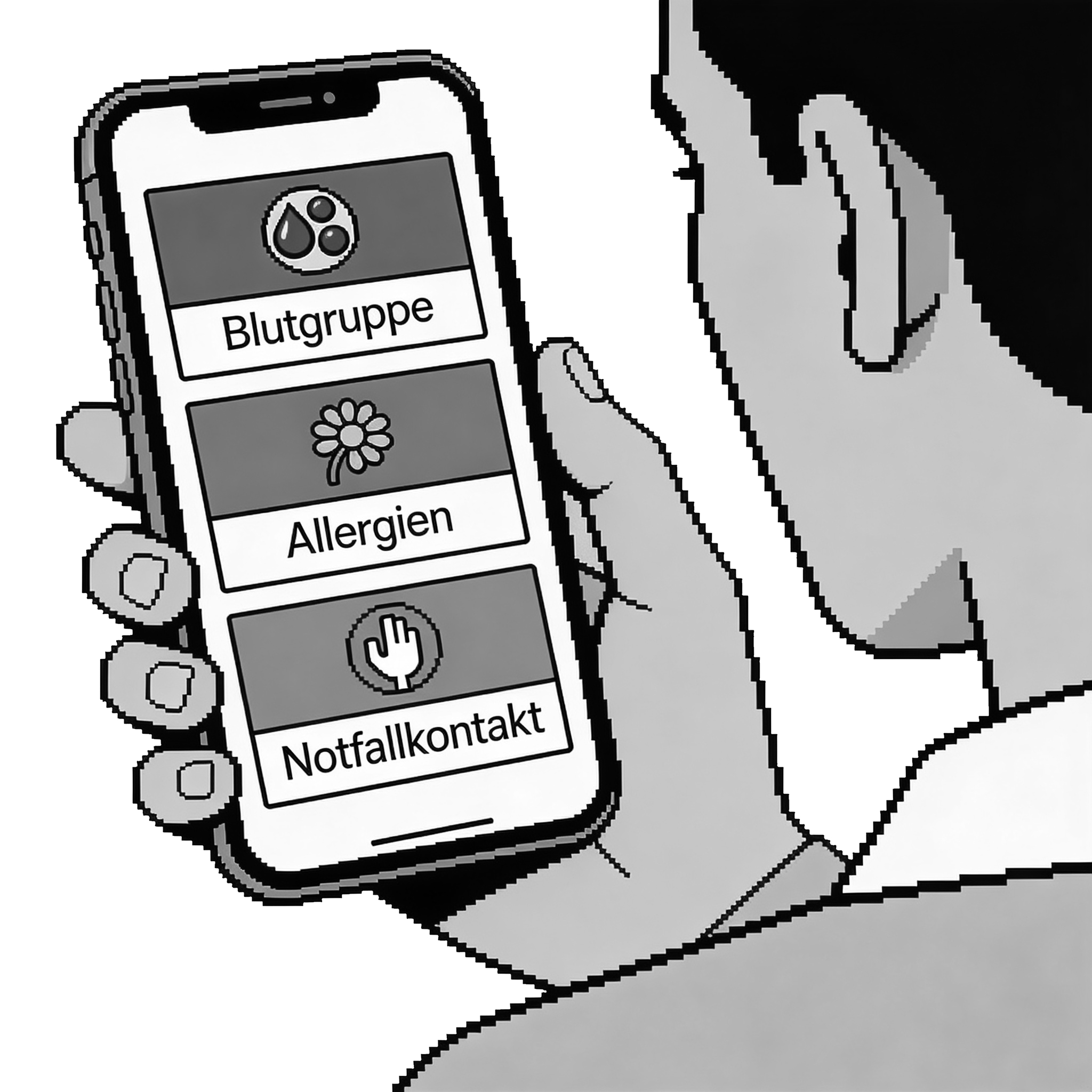
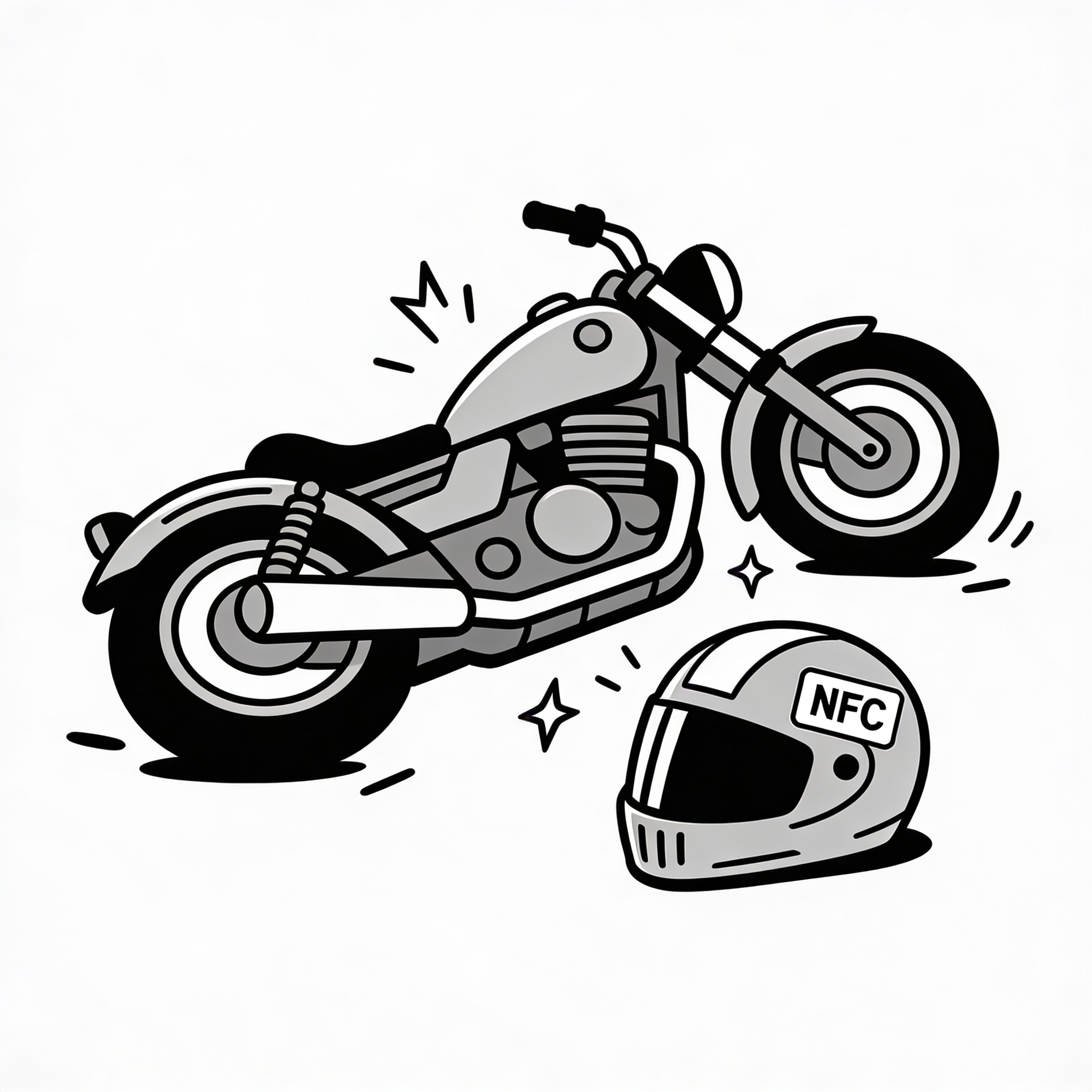
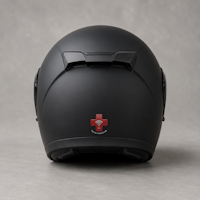
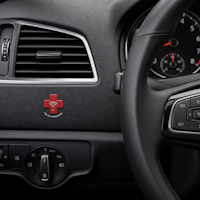
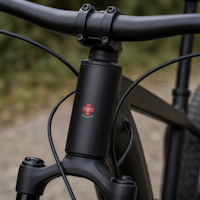
A crash badge is a very small NFC chip which contains your medical emergency information. It comes as a sticker or a card and can be read by any smartphone.
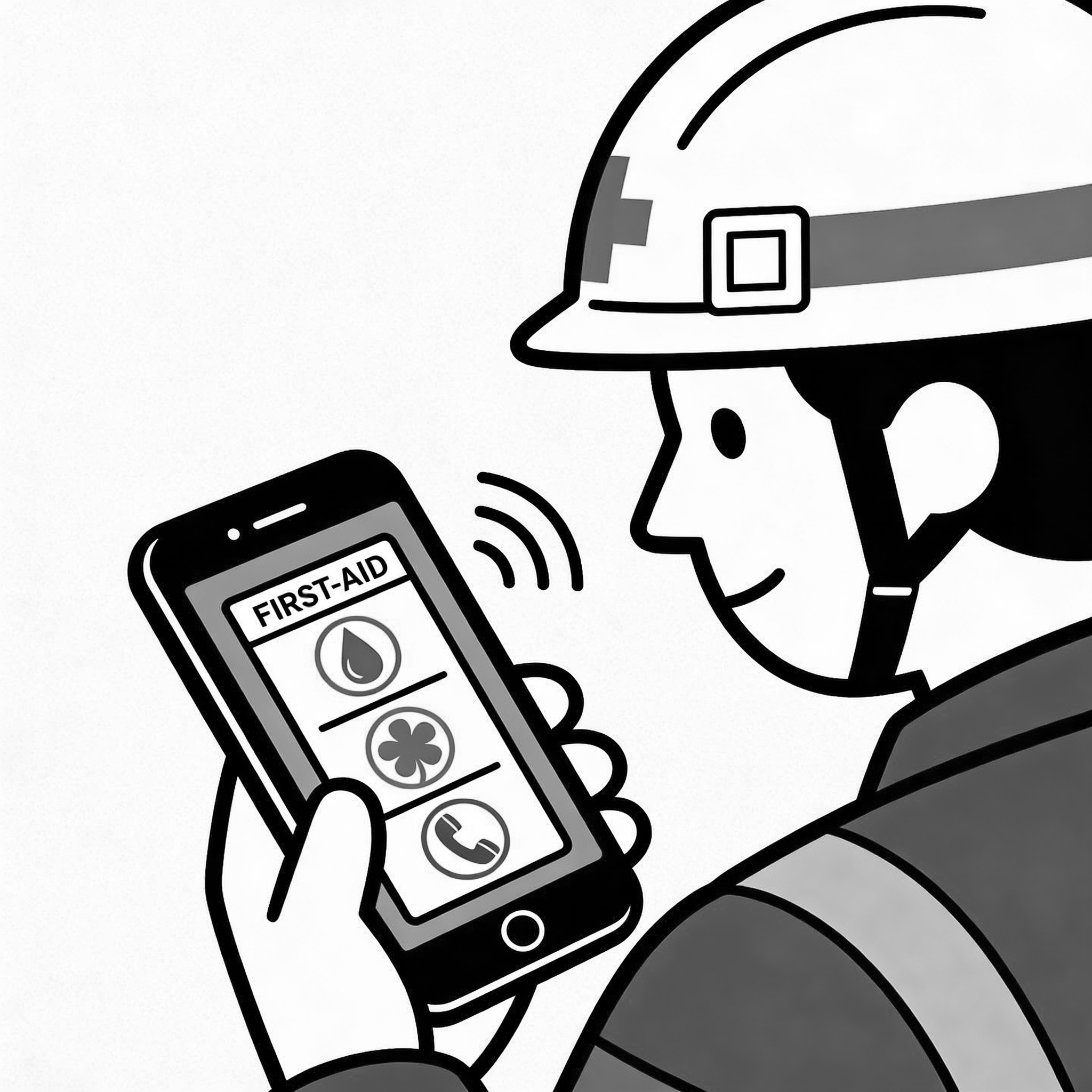
Unlike a QR code, no app is needed; a paramedic or anyone delivering first aid simply taps his phone against the crash badge to instantly open your life-saving medical profile.
How Does It Work?
Crash badges are "passive" devices. This means they do not have a battery and do not need to be charged. They contain a tiny microchip and an antenna. When a smartphone gets close, it sends out a small radio frequency field that powers the crash badge just long enough to read the information stored on it.
How to Use Your Medical Crash Badge in an Emergency
Accessing vital information in an emergency is a simple process for the paramedic or anyone who wants to help:
- Unlock the Phone: Most modern smartphones (iPhone and Android) require the screen to be "awake" or unlocked to read an NFC tag for security reasons.
- Locate the Sweet Spot:
iPhones: The NFC reader is located at the very top edge of the phone. / Androids: The reader is usually located in the center of the back of the device.
- Tap and Hold: Gently tap the top or back of the phone against your crash badge. A notification will instantly pop up on the screen—tap it to open the medical profile.
There is no special app needed to read these crash badges. As long as NFC is enabled in the phone's settings (which it is by default on almost all devices made after 2018), it works automatically!
Why Use Crash Badges for medical information?
- Speed: In an emergency, every second counts. Tapping is faster than typing a URL or scanning a code.
- Durability: Crash badges can be embedded in stickers and cards.
- Ease of Use: It requires zero technical knowledge from the person providing aid.